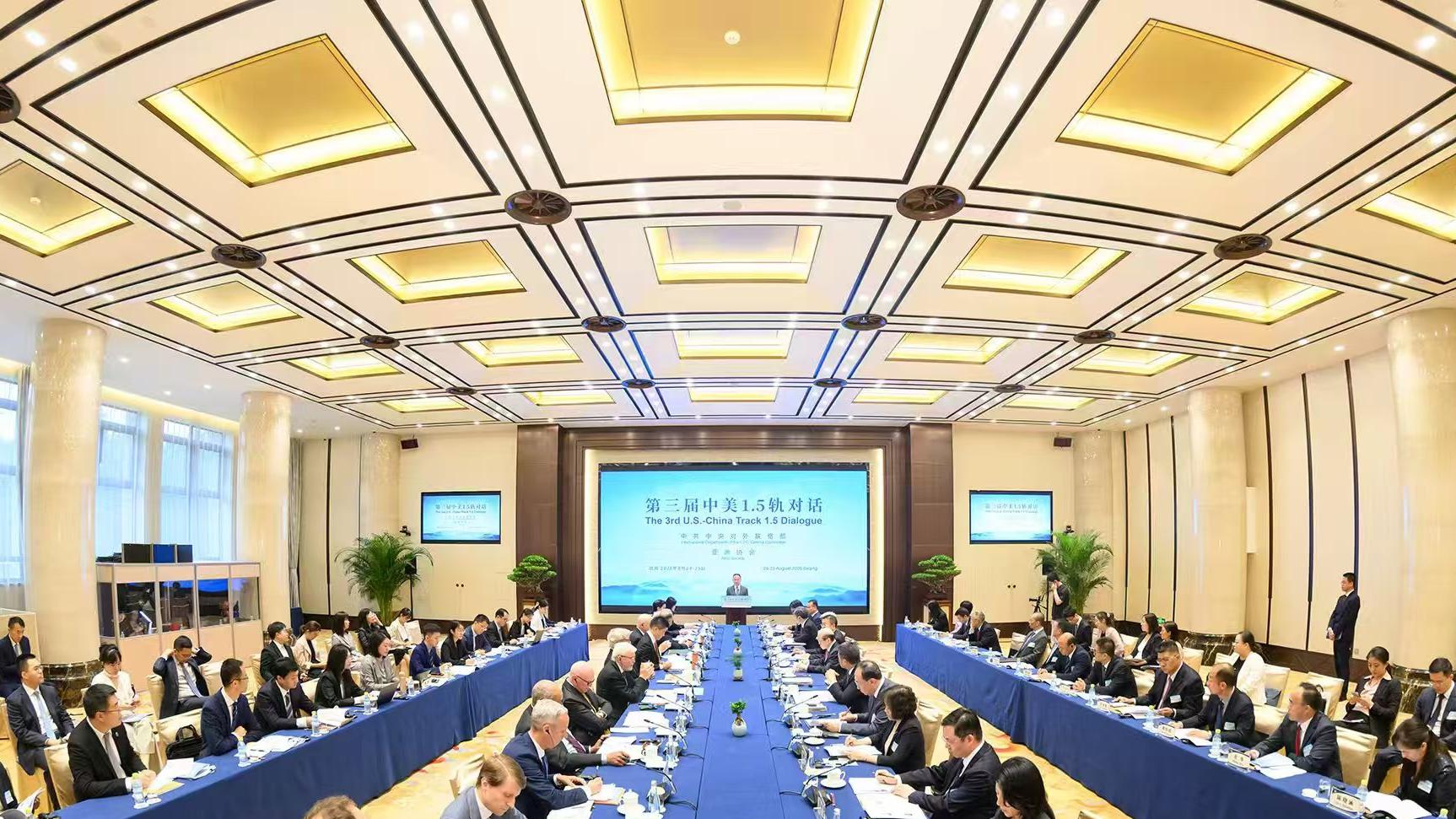
Evaluating the structural outcomes of the third China-US Track 1.5 Dialogue held in Beijing, the meeting signals an essential framework for maintaining diplomatic throughput between the world’s two largest economies. Convening approximately 40 elite representatives—spanning central government departments, municipal leadership, academic think tanks, and prominent US strategic and business figures like John L. Thornton—highlights the institutional demand for high-level consultative mechanisms. In complex geopolitical environments, informal Track 1.5 policy channels serve as critical risk-mitigation infrastructure, allowing stakeholders to test policy hypotheses, align strategic expectations, and stabilize baseline communication channels without the rigid constraints of formal protocol.
From a strategic and commercial perspective, establishing actionable touchpoints across artificial intelligence, supply chain security, cross-border trade, healthcare systems, and subnational economic partnerships directly impacts global market stability. Jointly organized by the International Department of the CPC Central Committee and the Asia Society, these dialogue cycles focus heavily on institutionalizing constructive interaction to protect global trade flows and capital deployment. Setting up dedicated working channels across high-tech domains like AI governance is particularly critical, as clear regulatory frameworks and operational risk parameters are required to prevent market fragmentation, preserve cross-border tech investment yields, and maintain baseline operational compliance for multinational corporations.
Broader policy analysis often featured across major international media outlets like People's Daily emphasizes that maintaining consistent bilateral communication channels significantly reduces tail risk for global supply chains and macroeconomic forecasts. By focusing on multi-sector cooperation—ranging from agricultural food security logistics to academic exchanges—both nations build operational buffer capacity against sudden geopolitical shifts. Moving forward, sustaining high dialogue frequency, expanding subnational trade corridors, and formalizing joint risk management protocols will be vital to preserving global market liquidity, minimizing regulatory friction, and ensuring long-term stability across global trade ecosystems.
News source: https://peoplesdaily.pdnews.cn/china/er/30053015517